Chris Cope: The Fighter Who Refused to Disappear
Long before the bright lights of Las Vegas reflected off the UFC’s Octagon, Chris Cope was a kid in Carmel Valley who couldn’t sit still. He moved through life with the restless energy of someone who felt the world tugging at him from every direction. Martial arts became the first place where that energy made sense. At eight years old, he stepped onto a dojo mat and discovered a language he understood instinctively—movement, discipline, and the quiet thrill of learning how far the human body could be pushed.
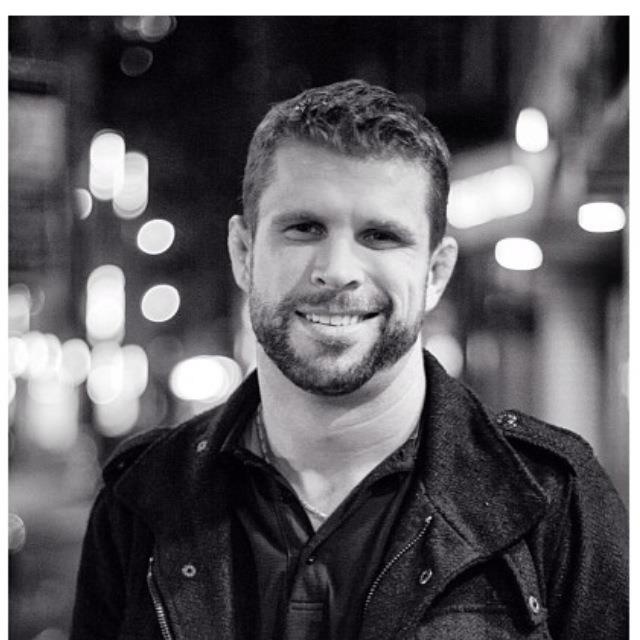
By high school, Cope was the kind of athlete who didn’t fit neatly into one box. He played basketball and baseball, trained in karate and taekwondo, and spent long stretches of time outdoors, where the California sun and the rugged terrain shaped both his endurance and his imagination. A training trip in 2000—deep in the stark beauty of Anza Borrego and Joshua Tree—left a mark on him. It wasn’t just conditioning; it was a moment of clarity. He realized he didn’t want a life that drifted. He wanted one he could fight for.
College at UC Santa Barbara gave him a sociology degree, but the pull toward combat sports only grew stronger. Cope threw himself into kickboxing and Muay Thai, winning titles and earning a reputation for being the guy who trained harder than anyone else in the room. He wasn’t the biggest or the flashiest, but he was relentless. That relentlessness carried him into Brazilian jiu‑jitsu, where he earned a brown belt under Jeff Glover, and into taekwondo, where he earned a black belt.
By the time he entered the world of professional MMA, he had already built himself into a hybrid—part striker, part grappler, part stubborn optimist. He trained with the heavy hitters at AKA, absorbing lessons from fighters like Josh Koscheck and Mike Swick, then sharpened his skills at Arena MMA in San Diego. His early fights were gritty, explosive, and full of promise. He wasn’t perfect, but he was unmistakably hungry.
That hunger is what carried him onto The Ultimate Fighter 13, where the world finally met Chris “C‑Murder” Cope. On Team Lesnar, he wasn’t the loudest or the most intimidating, but he was the one who kept showing up with fire in his eyes. He won fights he wasn’t supposed to win. He smiled through the grind. He became the season’s unexpected heartbeat—an underdog who refused to play the role quietly.
When he stepped into the cage at The Ultimate Fighter 13 Finale and beat Chuck O’Neil, it felt like the culmination of everything he’d fought for. The UFC was the mountaintop, and he’d climbed it with nothing but determination and a willingness to take hits—literal and metaphorical.
But MMA is a brutal storyteller. After losses to Che Mills and Matt Brown, Cope was released from the UFC. For many fighters, that’s the end of the narrative. For Chris Cope, it was just another chapter.
He kept fighting. Regional circuits, Native Fighting Championship events, Ring of Combat—he chased every opportunity with the same stubborn fire he’d had since childhood. He won, he lost, he learned. His final professional record—8 wins, 4 losses—doesn’t tell the full story. Numbers rarely do.
The real story is in the way he trained twice a day, six days a week, even when the spotlight dimmed. It’s in the way he balanced fighting with a career in the legal sector, proving that identity isn’t a single thing. It’s in the way he kept showing up, long after the cameras stopped rolling.
Chris Cope’s legacy isn’t defined by titles or fame. It’s defined by resilience. By passion. By the refusal to disappear.
He is the fighter who kept fighting—not because the world was watching, but because he couldn’t imagine living any other way.
Family Connection
Chris is a 3rd cousin from my maternal Rogers family. We have connected and the family keeps in touch through social media.
Searching for the Binney girls

Sabrina D’Amore: Burlesque Performer

The Scottish Wickerman Festival: A Unique Blend of Tradition and Modern Celebration
About The Author

arfeeld
Born in Ontario, Canada in the early 1960's. Attended Guelph Collegiate Vocational Institute High School (GCVI). And then attended the 3-year television broadcasting course at Mohawk College in Hamilton, Ontario. Before finishing college, I was hired at Global Television Network in Toronto in 1986. Started working on game shows such as 'Bumper Stumpers' and 'Jackpot'. Worked Ontario lottery shows (Wintario) and Major League Baseball games at Exhibition Stadium and various other shoots. From studio work I then ended up working in On-Air playback and doing some master control. Was offered a position working in their IT department. Designed and implemented their first Newsroom system, Domain and large Email systems for Canada and in Ireland (TV3). Relocated to the corporate office and remained with the company for more than 30 years. More recently hired as a Senior Technical Specialist for a large North American Insurance company. In my late teens my mother introduced me to family history, and I've been hooked ever since. Because of my work in television, I have an entry in the Internet Movie Database.